
Reusable Surface Protection with No Tape and No Residue
In short, reusable surface protection shields finished floors, countertops, and other surfaces from dirt, paint, tools, spills, and foot traffic. Cling Defense improves on traditional coverings by using cling technology to stay in place without tape and remove without leaving adhesive residue behind.
Key Takeaways
Reusable surface protection helps prevent scratches, dents, stains, paint splatter, and other avoidable jobsite damage.
Cling Defense mats stay in place without tape, reducing the risk of adhesive residue or tape-related surface damage.
Reusable materials can reduce repeated purchases and the amount of temporary protection discarded after each project.
The right surface protection depends on the surface, type of work, traffic level, moisture, and project duration.
Floors are not the only vulnerable areas. Countertops, cabinets, walls, doors, fixtures, and other finished surfaces may also require protection.
Product instructions and surface compatibility should always be reviewed before full installation.
Finished surfaces can be damaged long before a construction or remodeling project is complete.
A dropped tool can dent a hardwood floor. Paint can splatter across tile. Mud and grit can be tracked through finished rooms. Ladders, equipment, and repeated foot traffic can leave behind scratches, stains, or marks that require additional cleaning and repair.
Reusable surface protection gives contractors, painters, remodelers, installers, and homeowners a practical way to shield those surfaces while work continues.
However, many traditional protection methods create another problem. Rosin paper, cardboard, plastic sheeting, and drop cloths often need tape to prevent shifting. That tape can loosen, collect dirt, leave residue, or create concerns on finished surfaces.
Cling Defense is designed to avoid that step. Its mats cling directly to compatible surfaces without tape and lift away without leaving adhesive residue.
The goal is simple: protect finished surfaces without creating another cleanup problem.
Why Surface Protection Matters During Construction
Construction protection is not only about making a jobsite look tidy. It is a basic form of damage prevention.
Even a careful crew can bring abrasive dirt, fasteners, tools, ladders, carts, paint, adhesives, and construction materials into contact with finished areas.
A protective mat creates a temporary separation between those hazards and the surface underneath.
It helps protect completed work
Many construction projects happen in phases.
Flooring may be installed while painters, electricians, finish carpenters, appliance installers, and other trades still need access to the space.
Without protection, completed work remains exposed every time another person enters the room.
Temporary protection allows the project to continue while reducing direct contact with the finished surface.
Cling Defense is especially useful in this situation because crews can cover a surface without taping paper or plastic along every edge. The mat clings in place, helping reduce shifting while avoiding adhesive contact.
It can reduce avoidable repairs
A small scratch may require refinishing. A damaged tile may need to be removed and replaced. Paint, glue, or tape residue can require specialized cleaning.
The exact cost varies by project, but preventing damage is usually easier than coordinating repairs after the fact.
Surface protection can also support a cleaner final walkthrough by helping preserve the condition of completed areas.
A no-residue protection system can be particularly valuable near the end of a project. Once the mat is removed, crews do not have to spend extra time scraping or dissolving leftover tape adhesive.
It supports a more organized jobsite
Well-planned protection can identify designated paths, covered work zones, and finished areas that require extra care.
OSHA requires walking-working surfaces in general industry to be maintained free from hazards such as loose boards, spills, sharp objects, and other unsafe conditions. Protective coverings are not a substitute for housekeeping or safety procedures, but they should be included in the overall jobsite plan.
https://www.osha.gov/laws-regs/regulations/standardnumber/1910/1910.22
Cling Defense mats should also be inspected throughout the project. Any surface protection can become unsafe if it is torn, contaminated, folded, or incorrectly installed.
Reusable Versus Disposable Surface Protection
Reusable and disposable coverings can both have a place on a project. The better choice depends on the application.
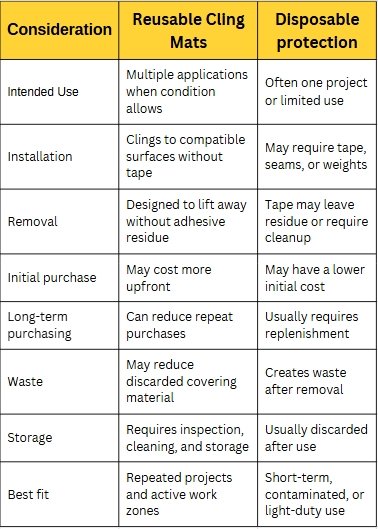
Reusable materials may make the most sense for contractors, painters, remodelers, installers, property managers, and maintenance teams that complete similar work regularly.
Disposable materials may still be appropriate when a covering becomes contaminated, damaged, unsafe, or difficult to clean.
The key question is not whether every disposable product is bad. It is whether new paper, plastic, cardboard, and tape need to be purchased and thrown away for every job.
Cling Defense provides another option: a reusable mat that stays in place through cling technology rather than disposable adhesive tape.
How Reusable Protection Can Reduce Jobsite Waste
The U.S. Environmental Protection Agency defines construction and demolition debris as a major material stream separate from ordinary municipal solid waste. Its estimates cover materials such as concrete, wood, drywall, asphalt, steel, brick, and tile.
Temporary coverings are only one part of a project’s overall material use. Still, purchasing fewer disposable products is a straightforward source-reduction decision.
The EPA identifies source reduction, material reuse, and better purchasing practices as methods construction teams can use to reduce disposal.
https://www.epa.gov/smm/sustainable-management-construction-and-demolition-materials
A reusable covering may help by:
Extending the useful life of the protection material
Reducing repeated purchases for similar jobs
Decreasing the amount of paper, plastic, and tape discarded
Making reuse part of standard project planning
Giving crews a consistent surface protection system
Reducing packaging and supplies associated with replacement coverings
Cling Defense also eliminates the separate tape component required by many traditional systems. That can mean fewer rolls of tape purchased, used, removed, and discarded.
These benefits depend on whether the mats are actually collected, inspected, cleaned when appropriate, stored properly, and used again.
A reusable product cannot reduce waste if it is treated as disposable.
Where Reusable Surface Protection Can Be Used
One of the strongest reasons to consider a multi-surface solution is that jobsite damage is not limited to floors.
Construction and renovation projects
General contractors and remodelers may need to protect completed rooms while other trades continue working.
Common risks include:
Tool drops
Equipment movement
Material staging
Mud and abrasive debris
Paint and finish work
Repeated foot traffic
Traditional rosin paper may need to be taped along its edges and seams. Tarps and drop cloths may slide, fold, or bunch under traffic.
Cling Defense is designed to cling directly to compatible surfaces, allowing crews to create protected work areas without taping the covering to the floor.
Painting Projects
Painters frequently need protection around floors, baseboards, countertops, stairs, fixtures, and nearby finished areas.
Drop cloths can work well in some applications, but they may shift or bunch when they are not secured correctly. Paper coverings may require several strips of tape to stay flat.
Cling Defense offers a no-tape alternative for compatible surfaces. The mat stays in place using cling adhesion and can be lifted away without leaving sticky residue.
[Internal Link to: Best Surface Protection for Painting Projects]
Flooring Installation
New flooring can become vulnerable immediately after installation.
Workers may still need to install trim, doors, cabinets, fixtures, or appliances after the floor is finished.
The selected covering must be compatible with the flooring and its installation timeline. Newly installed floors may have curing, ventilation, moisture, or adhesive requirements.
Cling Defense avoids applying tape directly to the floor, but the flooring manufacturer’s instructions still take priority. Freshly finished or sealed surfaces should not be covered until the applicable cure time and compatibility requirements have been confirmed.
Countertop and Cabinet Protection
Floor protection receives most of the attention, but countertops, cabinets, and other horizontal surfaces can also be damaged during construction.
Tools, paint cans, hardware, fasteners, and building materials are frequently placed on completed surfaces.
Cling Defense mats can provide a temporary barrier on compatible hard surfaces without requiring strips of tape around the edges. This helps protect the surface without introducing adhesive residue into the work area.
Moving and Material Delivery
Appliance deliveries, furniture moves, and material transport can expose floors, doorways, counters, walls, and corners to concentrated traffic.
Reusable protection can create a temporary route through a property instead of leaving every finished area exposed.
Because Cling Defense does not rely on tape, it can also be repositioned as the delivery or work path changes.
Home Improvement Projects
Homeowners can use surface protection while painting, assembling furniture, repairing drywall, replacing fixtures, completing craft projects, or moving heavy items.
Professional protection is not limited to commercial construction. The same principle applies to weekend projects: cover vulnerable surfaces before work begins.
How to Choose the Right Construction Surface Protection
There is no single covering that is automatically right for every job.
Evaluate the following factors before selecting a product.
1. Identify the Surface
Start with the material underneath:
Finished hardwood
Unfinished or curing wood
Tile
Vinyl or resilient flooring
Stone
Laminate
Concrete
Carpet
Painted wall
Countertop or cabinet finish
A covering that performs well on cured tile may not be suitable for a newly sealed wood floor.
2. Identify the Risks
Consider what the protection must withstand.
Will the area experience:
Light foot traffic
Heavy contractor traffic
Ladders or carts
Paint or liquid spills
Sharp debris
Dropped tools
Dust and grit
Long-term coverage
A light painting project and a commercial renovation have very different protection needs.
3. Check Compatibility and Curing Requirements
Some surfaces need airflow or time to cure. Others can react to moisture, adhesives, ink, tape, or trapped contaminants.
The no-tape design of Cling Defense removes one common concern: adhesive tape is not applied to the finished surface.
However, users should still:
Read the Cling Defense product instructions.
Review the surface manufacturer’s requirements.
Confirm that paint, stain, sealant, or flooring adhesive has cured.
Clean and dry the area.
Test the mat in a small, hidden location before full coverage.
Testing is especially important for recently installed, painted, sealed, stained, polished, or refinished surfaces.
4. Consider Movement and Traction
Loose, curled, torn, or poorly secured material can create a jobsite problem.
Paper coverings and drop cloths are often taped down because they do not naturally grip the surface. If the tape loosens, the covering can shift.
Cling Defense uses cling adhesion to help the mat remain in place without a separate adhesive. It should still be installed flat and inspected regularly for contamination, damage, lifted edges, or movement.
5. Plan for Removal and Reuse
A reusable product needs a reuse process.
Before installation, decide:
How it will be removed
Whether and how it can be cleaned
H+ow contaminated material will be handled
Where it will be stored
How it will be inspected before its next use
This turns “reusable” from a product feature into an actual jobsite practice.
How to Install No-Tape Temporary Surface Protection
Always follow the instructions provided with the product. A careful installation process helps protect both the mat and the surface underneath.
Step 1: Inspect the Surface
Look for moisture, uncured finishes, loose materials, existing damage, and contamination.
Photographing the surface before coverage can help document its original condition.
Step 2: Clean and Dry the Area
Dirt trapped underneath a covering can act like sandpaper when people walk over it.
Remove dust, grit, screws, fasteners, and other debris before installing the mat.
Step 3: Test a Small Area
Place a section of the mat in a small, hidden location.
Check for finish changes, trapped moisture, discoloration, or another unexpected reaction before covering a larger area.
Step 4: Place the Cling Defense Mat Without Tape
Unlike traditional rosin paper, plastic sheeting, or taped-down drop cloths, Cling Defense does not require a tape step.
Lay the mat flat on the clean, compatible surface and allow its cling technology to grip the area underneath.
There is no need to tape the perimeter or apply adhesive directly to the finished surface.
Step 5: Align Adjoining Mats or Sections
Keep edges and transitions neat, especially in active walkways.
Avoid creating raised overlaps or uneven transitions that could interfere with foot traffic or equipment.
Step 6: Inspect the Protected Area Regularly
Protection can shift, tear, become wet, or collect debris as work progresses.
Check high-traffic areas daily and after major work activities. Reposition or replace any mat that is damaged, contaminated, or no longer lying flat.
Step 7: Lift and Store the Mat
Remove loose debris before lifting the mat.
Lift it carefully, inspect both the mat and protected surface, and follow the recommended cleaning and storage process before reuse.
Because there is no tape, there should be no adhesive-removal step after the mat is lifted.
Common Surface Protection Mistakes
Choosing by Price Alone
The least expensive option is not automatically the lowest-cost option.
Consider installation time, tape purchases, repeat material purchases, durability, disposal, cleanup, and the level of protection required.
Covering a Dirty Floor
A mat cannot protect effectively if sharp or abrasive debris is trapped underneath it.
Preparation is part of the protection system.
Taping Directly to a Finished Surface
Traditional protection methods often depend on tape to hold paper, plastic, or fabric in position.
Tape can leave residue, pull at coatings, collect grime, or require additional cleanup.
Cling Defense solves this problem by using cling technology instead of tape. There is no adhesive strip to apply to the finished surface and no tape residue to remove afterward.
Ignoring Newly Installed Surface Requirements
New floors and finishes may need time to cure or release moisture.
A no-tape mat avoids adhesive contact, but it should not be installed before the surface manufacturer allows temporary coverage.
Using the Same Product Everywhere Without Testing
Carpet, hardwood, tile, walls, countertops, and cabinets can have different requirements.
Multi-surface protection should never be interpreted as no testing required.
Installing Protection and Forgetting It
Temporary protection needs ongoing inspection.
Crews should check for tears, shifting, wet areas, accumulated debris, lifted edges, and unsafe transitions.
Why Contractors Are Moving Toward No-Tape Reusable Protection
Reusable protection supports several practical contractor priorities:
Preventing avoidable damage
Reducing repeat material purchases
Eliminating time spent taping down coverings
Avoiding adhesive residue cleanup
Limiting disposable jobsite materials
Standardizing setup procedures
Maintaining a cleaner presentation
Protecting work completed by earlier trades
It can also demonstrate attention to detail.
Clients may not see every stage of construction, but they notice whether their floors, counters, cabinets, and other finished surfaces are treated carefully.
Cling Defense is not simply another sheet of temporary protection. Its no-tape, no-residue design directly addresses two of the most common frustrations associated with traditional floor paper, plastic sheeting, and tarps.
From our work developing Cling Defense around real project needs, one lesson stands out: surface protection works best when it stays where it is placed and comes away without creating more work.
A Smarter Approach to Jobsite Protection
Good surface protection should be treated as part of project planning, not as a last-minute purchase.
Before work begins, identify:
Which surfaces are already finished
Which areas will receive the most traffic
What types of damage are most likely
How long the protection will remain installed
Whether the surface has fully cured
Whether the mat can be used again
Who is responsible for inspecting it
Reusable surface protection provides an alternative to automatically buying and discarding new paper, plastic, cardboard, and tape for every project.
Cling Defense takes that approach further by replacing taped-down protection with reusable cling mats that stay in place without adhesive and remove without leaving residue.
For contractors, painters, remodelers, installers, and hands-on homeowners, that means a cleaner and more efficient way to protect finished work.
No tape. No residue. Reusable protection that clings where you need it.
Frequently Asked Questions
Does Cling Defense need tape to stay in place?
No. Cling Defense is designed to stay in place using cling technology rather than painter’s tape, seam tape, or adhesive strips. On a clean, dry, compatible surface, the mat grips the area underneath without a separate tape step. This makes installation faster and avoids applying adhesive directly to the finished surface.
Will Cling Defense leave residue on floors or countertops?
Cling Defense is designed to lift away without leaving adhesive residue because it does not use tape or glue to stay in place. The mat relies on cling contact rather than a sticky coating. Surfaces should still be clean, fully cured, compatible with the product, and tested in a small area before full installation.
How does a mat stick to a surface without adhesive or tape?
Cling Defense uses cling technology that creates surface contact and grip without a traditional adhesive layer. The mat rests against a clean, smooth, compatible surface and resists movement without being taped down. Because no glue is transferred to the surface, the mat can be removed without the usual adhesive-residue cleanup.
Is Cling Defense safe for finished hardwood or freshly sealed floors?
Cling Defense may be suitable for compatible finished hardwood, but freshly stained, sealed, coated, or installed floors require extra care. Confirm the finish is fully cured, review the flooring or coating manufacturer’s instructions, and test the mat in a hidden area first. Do not cover a fresh finish before its approved cure time.
Author Bio
Cling Defense Team
The Cling Defense team develops practical reusable surface protection for contractors, painters, remodelers, installers, and home-project professionals. Our product and educational content focus on protecting finished surfaces without tape, adhesive residue, or unnecessary disposable materials. We combine jobsite-focused product knowledge with clear guidance for safer, cleaner project preparation.