
Cling Defense vs. Traditional Surface Protection: What Contractors Should Compare
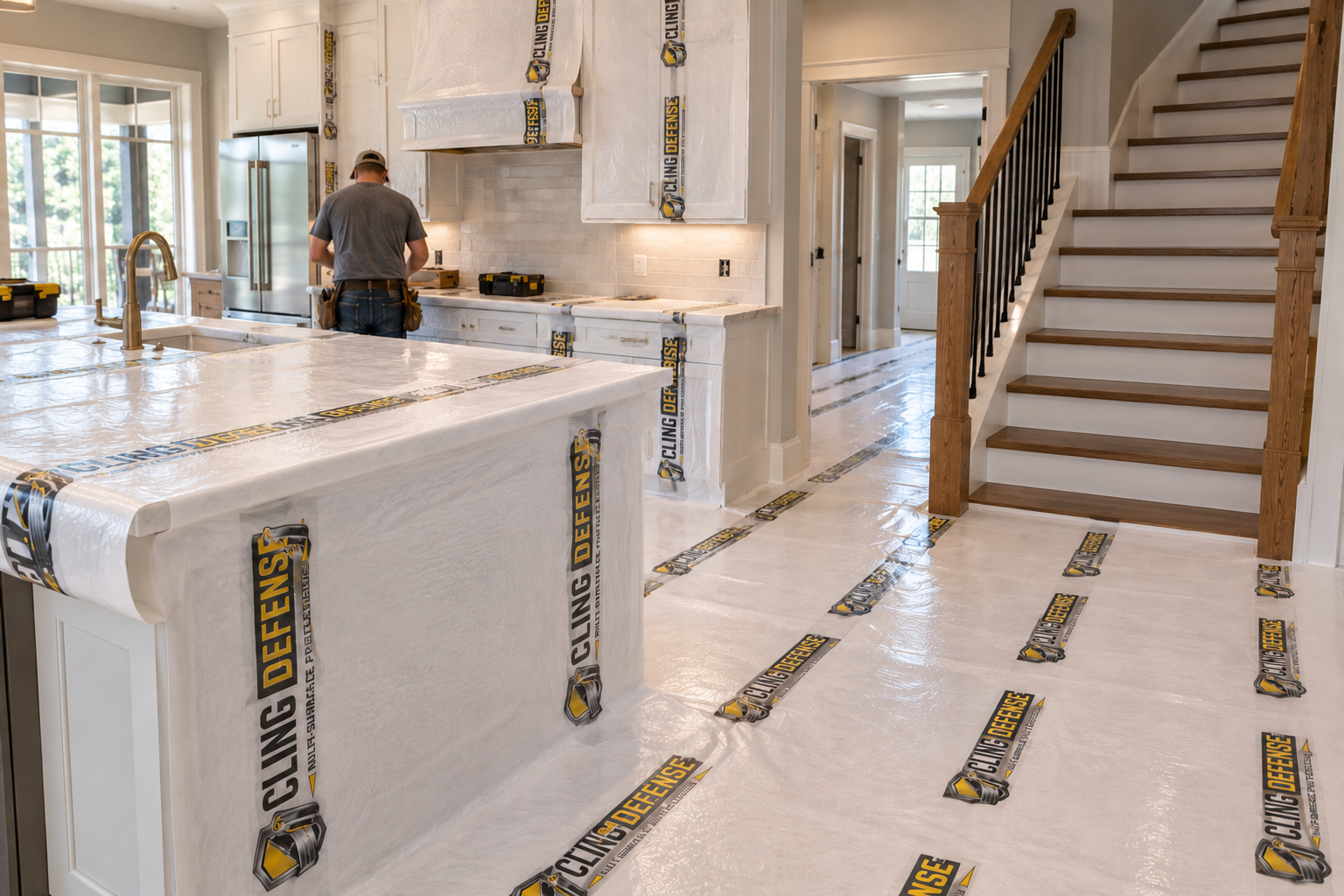
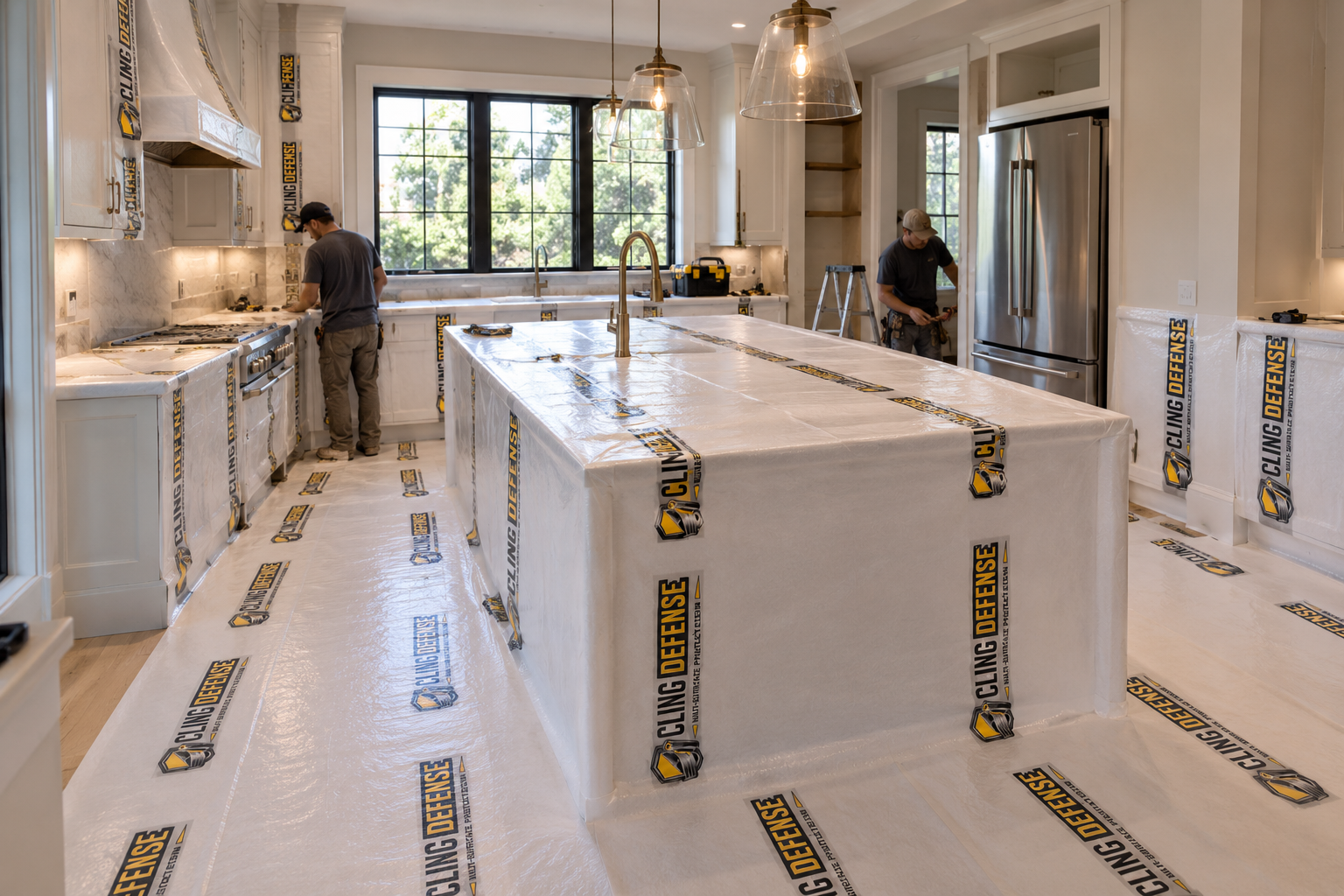
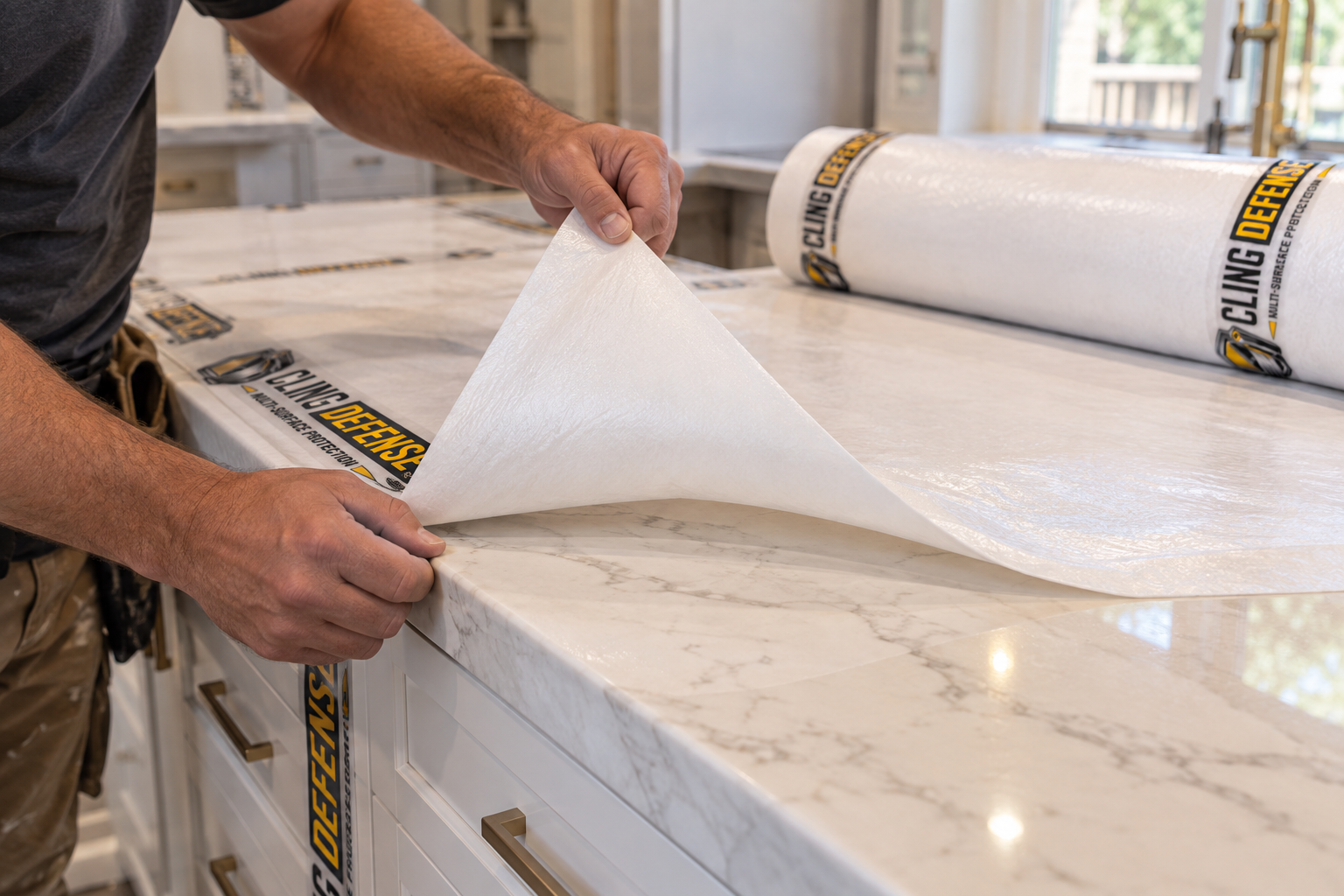
Cling Defense temporary surface protection covering floors, countertops, and cabinets during a residential remodeling project while a contractor works nearby.
Protecting finished work is not as simple as covering the floor.
On an active construction or remodeling project, vulnerable finishes can include flooring, countertops, cabinets, stairs, doors, windows, finished walls, millwork, and appliances. The temporary surface protection that works well in a main walkway may not necessarily be the right solution for a countertop, cabinet face, glass panel, or vertical finished surface.
That is the main difference contractors should consider when comparing Cling Defense with traditional surface protection. Cling Defense is a self-adhesive, multi-surface protection material designed to cling to suitable finished surfaces without requiring separate tape. Traditional protection is a much broader category that can include floor-focused coverings and other materials whose installation methods, surface compatibility, breathability, reuse, and removal requirements vary by product.
Neither category should be treated as interchangeable across every jobsite condition. The practical question is: What surfaces need protection, how will the material be installed, how long will it remain in place, and what will happen when it is time to remove it?
What Is Temporary Surface Protection?
Temporary surface protection is material installed for a limited period to help protect finished surfaces while construction, remodeling, painting, installation, moving, demolition, or other work continues nearby.
Contractors typically think about surface protection once part of a project is finished but the job itself is not.
A kitchen remodel is a good example. New flooring may already be installed while painters, electricians, appliance installers, and finish carpenters are still moving through the space. At the same time, completed countertops, cabinet faces, doors, windows, stairs, and trim may also be exposed to dust, tools, paint, debris, foot traffic, and other jobsite activity.
The mistake is assuming that protecting the floor means the finished work is protected.
Good construction surface protection starts by identifying each vulnerable finish and then choosing protection appropriate for that surface and the conditions around it.
Cling Defense vs. Traditional Protection: Key Differences
Overhead view of a partially covered wooden stairway with brown kraft protective film secured by white peel-and-stick strips and a yellow-handled utility knife near a cut; exposed treads show dust, wood shavings, and paint flecks. Natural light and a drop cloth in the background suggest ongoing renovation and active job-site protection.
The biggest distinction between Cling Defense and traditional protection is not simply the material itself. It is how and where the protection is intended to be used.
Cling Defense is designed as multi-surface, self-adhesive temporary protection. It relies on its cling properties, so no separate tape is required, and it can be removed, repositioned, and reused when conditions allow. Traditional surface protection varies considerably by product. Some options are primarily designed for floors, some require tape or another securing method, and individual manufacturers may have different requirements for installation, reuse, breathability, and removal.
Here is what contractors should compare:
| Comparison Point |
Cling Defense | Traditional Surface Protection |
|---|---|---|
| Surfaces Supported | Floors, countertops, stairs, glass/windows, finished walls, doors, cabinets, millwork, appliances, trim, and other suitable finished surfaces. | Varies by product; many options are designed primarily for floors or specific surfaces. |
| Need for Separate Tape | No separate tape required; material relies on its cling properties. | Varies; some products may require tape or another method to secure them. |
| Ability to Reposition/Reuse | Can often be removed, repositioned, and reused when conditions allow. | Varies by material and manufacturer. |
| Breathability | Described as highly breathable and allows surfaces to breathe while protected. | Varies by product. |
| Resistance to Liquid Pass-Through | Leak resistant; helps prevent liquids from leaking through to protected surfaces. | Varies by product. |
| Ease of Cutting/Fitting | Roll out and cut to fit the area being protected. | Varies by material. |
| Temporary-Use Guidance | Intended for temporary protection; approximately 1–2 weeks should remove cleanly under normal conditions. | Follow the specific manufacturer's use-duration guidance. |
| Residue/Removal Process | Remove carefully; residue may become more likely when left for several months. | Depends on material, securing method, duration, surface, and manufacturer. |
| Suitability for Vertical Surfaces | Designed for suitable finished vertical surfaces including walls, doors, cabinets, and glass/windows. | Varies; floor-focused materials may not be intended for vertical applications. |
| Custom Branding Availability | Custom-branded rolls available; current minimum is 100 rolls. | Depends on supplier/product. |
| Waste/Reuse Potential | Reusable when conditions allow, which may reduce the amount of new material needed for subsequent applications. | Depends on whether the specific protection can be reused. |
The takeaway is not that one form of protection automatically replaces every other one. Contractors should match protection to the surface, jobsite environment, installation method, expected duration, and removal requirements.
Multi-Surface Protection vs. Floor-Focused Protection
A construction worker kneels on a protected hardwood floor inside a sunlit room, fitting a plank while surrounded by tools, trim pieces, and a roll of protective film covering adjacent surfaces.
Floor protection solves an important problem, but a finished project contains more than floors.
Consider a remodel where the flooring, stone countertops, cabinets, staircase, windows, and several interior doors have already been installed. Crews are still completing electrical work, painting, appliance installation, trim, and punch-list items.
Covering the main walking paths addresses only part of the exposure.
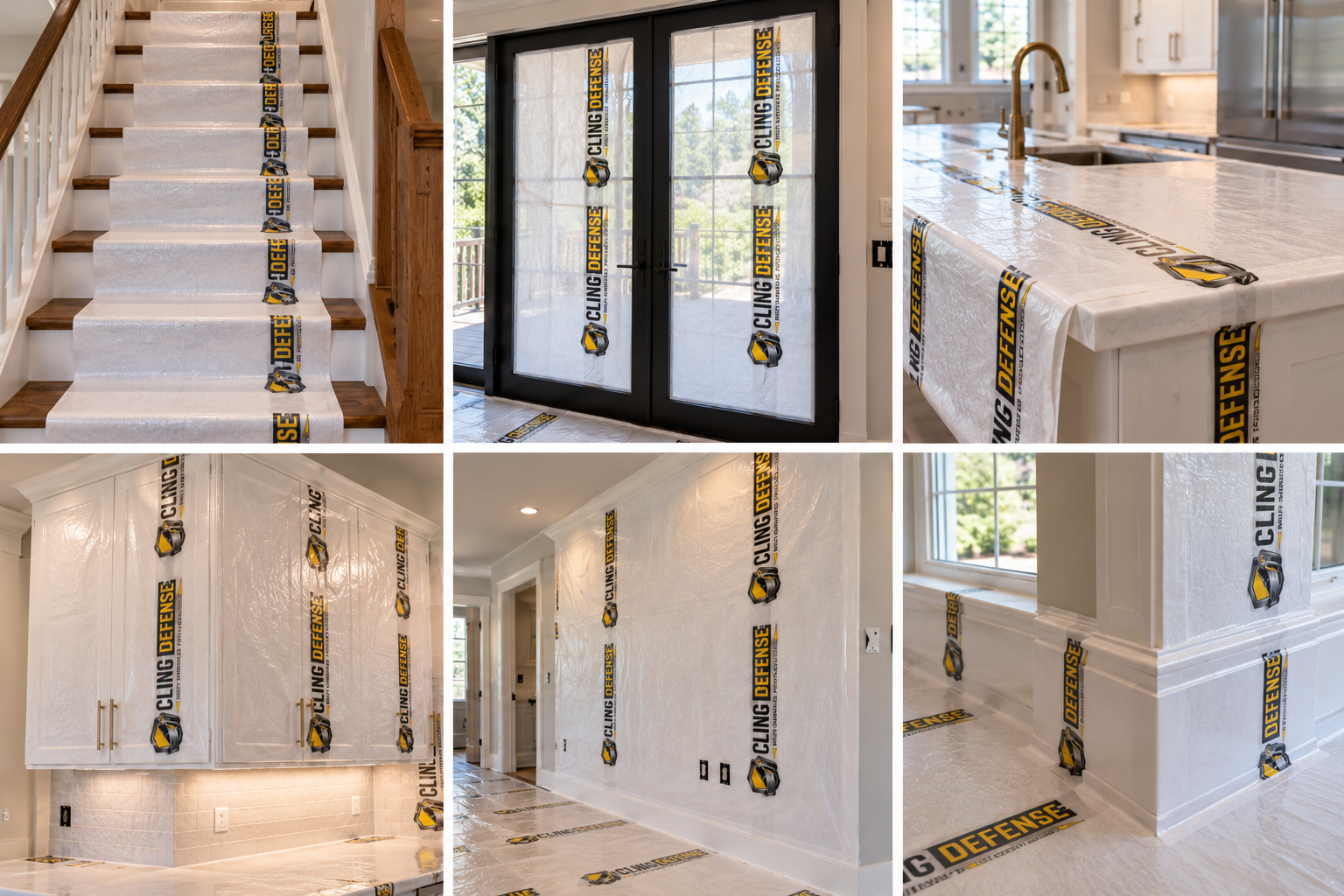
Cling Defense is designed for protection beyond floors, including countertops, stairs, glass, finished walls, doors, cabinets, millwork, appliances, and other suitable finished surfaces.
That multi-surface approach can be especially useful when a project contains finished horizontal, vertical, and irregular areas that all need temporary protection.
Surface suitability still matters. Contractors should not assume that any temporary protection can be applied to every coating or finish. Newly finished, coated, or treated surfaces should be fully cured and suitable for covering before protection is applied. When there is uncertainty, testing a small, inconspicuous area first is a practical step.
No-Tape Installation
Another difference is the installation method.
Cling Defense is self-adhesive temporary surface protection that relies on its cling properties to stay in place. No separate tape is required.
That distinction is important. "No tape required" does not mean "adhesive-free."
Traditional protection products vary. Depending on the product and application, separate tape or another securing method may be needed. That creates additional considerations for contractors: where the tape is being applied, whether it is suitable for the underlying finish, and what removal will involve.
With Cling Defense, preparation becomes especially important because dust and debris can interfere with contact. The surface should be clean, dry, suitable for protection, and free of loose dust and debris before installation.
A worker in a yellow hard hat applies gray adhesive protective film to a staircase, smoothing it down with a hand while sunlight filters through nearby windows. The protective covering conforms to each step, preventing scuffs and dust during construction.
Repositioning and Reuse
Cling Defense can often be removed, repositioned, and reused when conditions allow.
The important phrase is when conditions allow.
A clean countertop or cabinet provides a different environment than a dusty jobsite floor. If dirt, dust, or debris accumulates on the cling side, the material may not perform the same way when moved to another location.
Contractors therefore should not evaluate reusable surface protection by asking, "How many times can I use it?"
A better question is, "What condition will the material be in when I need to use it again?"
Clean surfaces help preserve the cling properties for potential reuse. Heavy dirt, dust, debris, and repeated use can gradually reduce cling performance.
What Surfaces Need Protection Beyond the Floor?
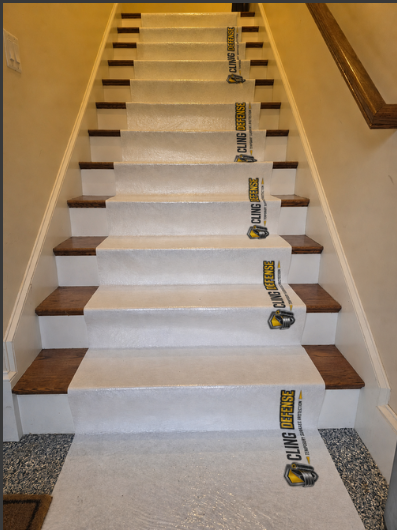
A contractor kneels on a staircase covered with gray, non-slip protective film, smoothing it down as sunlight filters through nearby windows. The surrounding banister and steps are shielded from dust and scuffs by the taped-free surface protection.
Finished floors often receive the most attention because crews repeatedly walk across them. But damage does not happen only underfoot.
During remodeling and construction, consider every completed surface that remains exposed to ongoing work:
Countertops: Tools, materials, paint, debris, and equipment may be placed directly on completed surfaces.
Cabinets and millwork: Finish work may be complete while other trades continue working nearby.
Stairs: These combine finished surfaces with frequent movement between levels.
Windows and glass: Work near glass can expose it to paint, dust, tools, and jobsite activity.
Finished walls and doors: Painting, installations, deliveries, and equipment movement can put completed vertical finishes at risk.
Appliances and trim: Installed items may remain exposed while punch-list work continues.
This is why a floor-only protection plan may leave gaps.
Before work resumes in a finished area, walk the space and identify what has already been completed. Think about where crews will walk, where they will set tools, what surfaces are next to active work, and what finished areas could be contacted during deliveries or installation.
Then select jobsite surface protection appropriate for those specific surfaces.
When Does Reusable Surface Protection Make Sense?
Reusable surface protection makes the most sense when jobsite conditions allow the material to retain the properties needed for another application.
For Cling Defense, cleanliness is a major factor.
According to the Product Specs & Care guidelines, applying the material to a clean, dry surface free of loose dust and debris gives it the best opportunity to maintain its cling properties.
For example, material removed from a clean cabinet, countertop, or finished wall may remain in better condition for repositioning than material that has collected substantial dust and debris.
Reuse should therefore be treated as an opportunity rather than a guaranteed number of cycles.
Careful removal also matters. If the material remains sufficiently clean and in usable condition, it can be repositioned or saved for potential reuse. If jobsite conditions have significantly affected the cling side, contractors should evaluate its condition before relying on it for the next protected area.
This condition-dependent approach is more useful than assuming all "reusable" protection performs identically regardless of where it was installed.
Breathability and Leak Resistance: What Those Terms Actually Mean
Product terminology matters when selecting temporary surface protection.
Cling Defense is described as highly breathable, meaning it allows surfaces to breathe while remaining protected. Contractors should not extend that claim into unsupported conclusions about curing time, moisture management, or other performance characteristics.
The same applies to liquid protection.
Cling Defense is leak resistant and helps prevent liquids from leaking through to protected surfaces. It should not be described as waterproof, watertight, or floodproof.
Those distinctions matter because stronger-sounding terminology can create expectations that the product documentation does not support.
Surface condition matters here as well. The Product Specs & Care guidance calls for application to a clean, dry surface free of loose dust and debris. Contractors should also check that the underlying finish is suitable for protection and follow the care requirements of that surface.
If a surface is newly finished, coated, or treated, confirm that it is fully cured and suitable for covering before applying protection.
What Contractors Should Consider Before Choosing Protection
The right temporary surface protection depends on the job, not just the product category.
Before choosing protection, contractors should consider several practical questions.
What surfaces are already finished?
Do not stop at the floor. Identify countertops, cabinets, stairs, glass, doors, finished walls, appliances, millwork, trim, and other exposed finishes.
Is the protection intended for that surface?
A product designed primarily for flooring should not automatically be treated as suitable for cabinets, glass, finished walls, or other surfaces. Check product guidance and the care requirements of the underlying finish.
How will it stay in place?
Determine whether the product requires separate tape, another securing method, or uses self-adhesive or cling properties.
What are the jobsite conditions?
Dust, debris, dirt, foot traffic, and ongoing work can affect both protection performance and the potential for reuse.
How long will the protection remain installed?
Temporary-use guidance matters. Cling Defense should remove cleanly under normal conditions when used for approximately one to two weeks. When material remains in place for several months, residue may become more likely depending on the surface, environment, and length of application.
Will the material need to be repositioned?
If crews will move protection from one finished area to another, consider whether the product is designed for repositioning and what jobsite conditions could affect that capability.
Does the project include vertical surfaces?
Doors, cabinets, glass, walls, and other vertical finishes may require a different approach than a horizontal floor covering.
What happens at removal?
Installation is only half the job. Contractors should understand how the protection should be removed and what care is recommended afterward.
For companies that want their protection materials to carry their identity across active jobsites, Cling Defense also offers custom-branded rolls with a current minimum purchase of 100 rolls.
The broader lesson is simple: choose protection based on the actual finishes and conditions on the project rather than treating all construction surface protection as interchangeable.
How to Apply and Remove Cling Defense Correctly
A contractor wearing work boots stands on a covered hardwood floor in a sunlit room, rolling out a gray protective film labeled "Cling Defense" over the surface. Nearby, a ladder, painting supplies, and taped-off trim indicate an active renovation.
Proper application starts before the roll touches the surface.
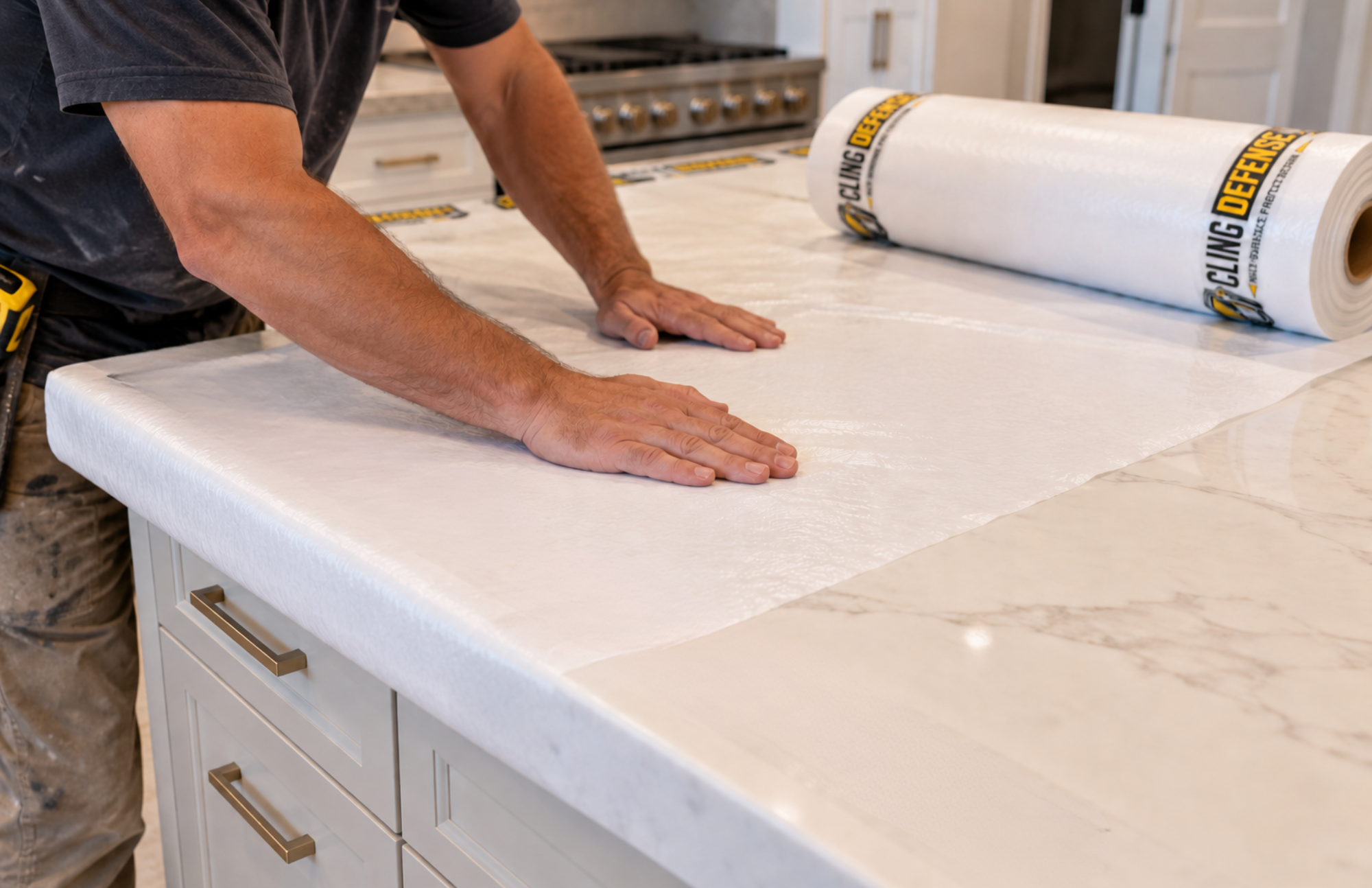
Cling Defense's How It Works process is straightforward: roll it out, smooth and protect, then remove and reuse when conditions allow. The quality of the surface preparation and removal process helps determine how well that process works.
1. Check the surface.
Make sure the finished surface is suitable for protection. For newly finished, coated, or treated surfaces, confirm that the surface is fully cured and suitable for covering. Consider testing a small, inconspicuous area before a larger application when appropriate.
2. Clean and dry the surface.
Remove loose dust and debris. Cling Defense relies on its cling properties to make contact with the finished surface, so dirt and debris can interfere with performance.
3. Roll out the material.
Position enough material for the area that needs protection.
4. Cut it to fit.
Cut the material to the appropriate size away from the protected surface. This avoids using a cutting tool directly against the finish you are trying to protect.
5. Smooth and pat it down.
Apply hand pressure so the material makes good contact with the surface.
6. Use it as temporary protection.
Monitor longer projects rather than assuming protection can remain untouched indefinitely. For approximately one to two weeks of use, Cling Defense should remove cleanly under normal conditions. Residue may become more likely when it remains installed for several months, depending on the surface, environment, and duration.
7. Remove carefully.
Peel the material away with care and evaluate its condition. If the cling side remains clean enough and jobsite conditions allow, the material can be repositioned or saved for potential reuse.
If residue is present after extended use, current Cling Defense guidance recommends gently cleaning the affected area with hot water and Dawn® dish soap while following the care requirements of the underlying surface. Harsh solvents or aggressive chemicals should not be used for this purpose.
The Bottom Line: Match the Protection to the Project
The difference between Cling Defense and traditional surface protection comes down to how the protection fits the job.
Traditional protection encompasses many different products, including floor-focused options, and individual products vary in how they are secured, where they can be used, whether they can be repositioned, and how they should be removed.
Cling Defense is designed as self-adhesive, multi-surface temporary protection for suitable finished surfaces. It requires no separate tape, can be cut to fit, is highly breathable and leak resistant, and can often be removed, repositioned, and reused when conditions allow.
For contractors, the goal should not be to find one protection product and assume it works everywhere. Start with the finished surfaces, expected jobsite conditions, installation requirements, project duration, and removal process. Then choose the protection that fits those requirements.
Protect more than the floor. Request ordering information for 3 ft × 100 ft Cling Defense rolls providing 300 sq. ft. of coverage.